

Chair finder
Which Gunnell chair does the patient need?
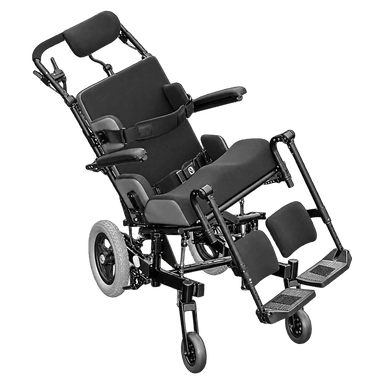
Four questions separate the six models. Answer them for the patient who will use the chair and you get a model, the configuration to ask for and a quote request with the answers already written in.
Step Your role1 of up to 6
Who is asking?
This does not change the result. It tells Gunnell who to reply to and what to send with the quote.
The result is a starting point based on your answers, not a prescription. A therapist or seating specialist should assess the patient before a chair is ordered, and Gunnell may recommend a different configuration after seeing the measurements.
How the finder decides
It is a decision tree, not a score. The first question tells Gunnell who is asking. The next four narrow the choice or settle it, in the order a seating specialist works: position first, then the patient, then the care plan. The last question does not change the model; it sets the wheels, brakes and handle to ask for.
Answer the questions- 01
Who is asking?
This does not change the result. It tells Gunnell who to reply to and what to send with the quote.
- Purchasing at a hospital or facility: Volume orders, lead times, documentation for tenders.
- Nursing leadership or clinical director: Staff, care settings and chairs for the unit.
- Therapist or seating specialist: OT, PT or ATP specifying the chair.
- Dealer or distributor: Configurations, pricing and lead times.
- Family member or wheelchair user: We will point you to a specialist near you.
- Other
- 02
What position can the patient hold?
If you are not sure, ask the therapist: this is the one answer that changes the type of product.
- Seated, with support: Can sit at about 90° at the hips, with a seating system and tilt or recline for rest.
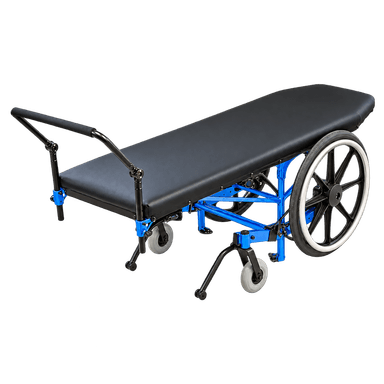
- Reclined or lying on the back: Cannot flex at the hips or knees, or is pushed out of a seat by extensor tone.
- Face down only: Any load on the buttocks is ruled out: healing pressure injuries, flap surgery, spinal protocols.
- 03
Who is the chair for?
- A child or teenager: Seat width up to 17”. The frame adjusts as they grow.
- An adult: Seat width from 16”.
- 04
What is the patient’s weight?
Choose the rating with margin. Frame width is set separately, from the seated hip width.
- Up to 500 lb
- More than 500 lb, up to 750 lb: Or a seated hip width that needs a 25” frame or wider.
- 05
What does the care plan call for?
- Tilt-in-space: Pressure relief and rest without changing the hip angle. Recline can be added.
- Recline only: A heavy-duty base that reclines but does not tilt.
- Not sure yet: Tilt covers most prescriptions; the therapist confirms.
- 06
Who will move the chair?
This does not change the model. It changes the wheels, brakes and handle to ask for.
- Staff or a caregiver
- The patient, with their hands
- Both
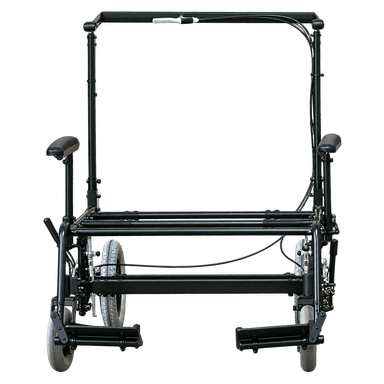
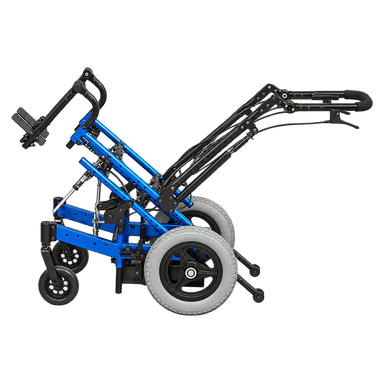
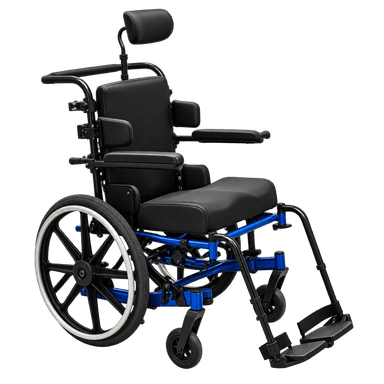
The six outcomes
Ready to experience the Gunnell difference?
Whether you’re seeking a custom mobility solution for yourself, a loved one, or your clients, we’re here to assist you throughout your journey.
- 01Request a quote
Request a quote
Models, number of chairs, care setting and the measurements you have. Gunnell replies with a configured quote and lead time.
- 02Compare the models
Compare the six models
Capacity, tilt, recline, widths, depths, heights, wheels, brakes and codes side by side. Printable for tenders.
- 03Contact Gunnell
Talk to Gunnell
Questions about a patient, a configuration or a chair you already have go straight to the factory that builds them.