
Prone-position mobility
Self Propelling Gurney
A unique blend of independence and comfort, designed for users to easily move themselves while ensuring safety and support.
- Base price
- $5,325.75
Category
A prone cart carries a patient lying face down and lets them move themselves. Gunnell builds one for patients who cannot tolerate sitting: after pressure injuries, surgery or spinal conditions that rule out a seated wheelchair.
Prone-position mobility
A unique blend of independence and comfort, designed for users to easily move themselves while ensuring safety and support.
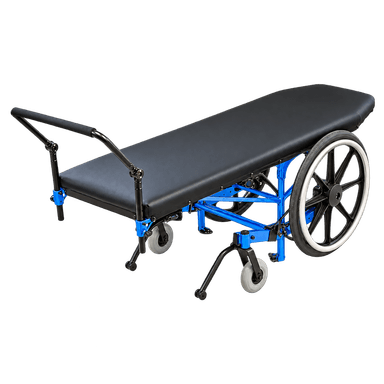
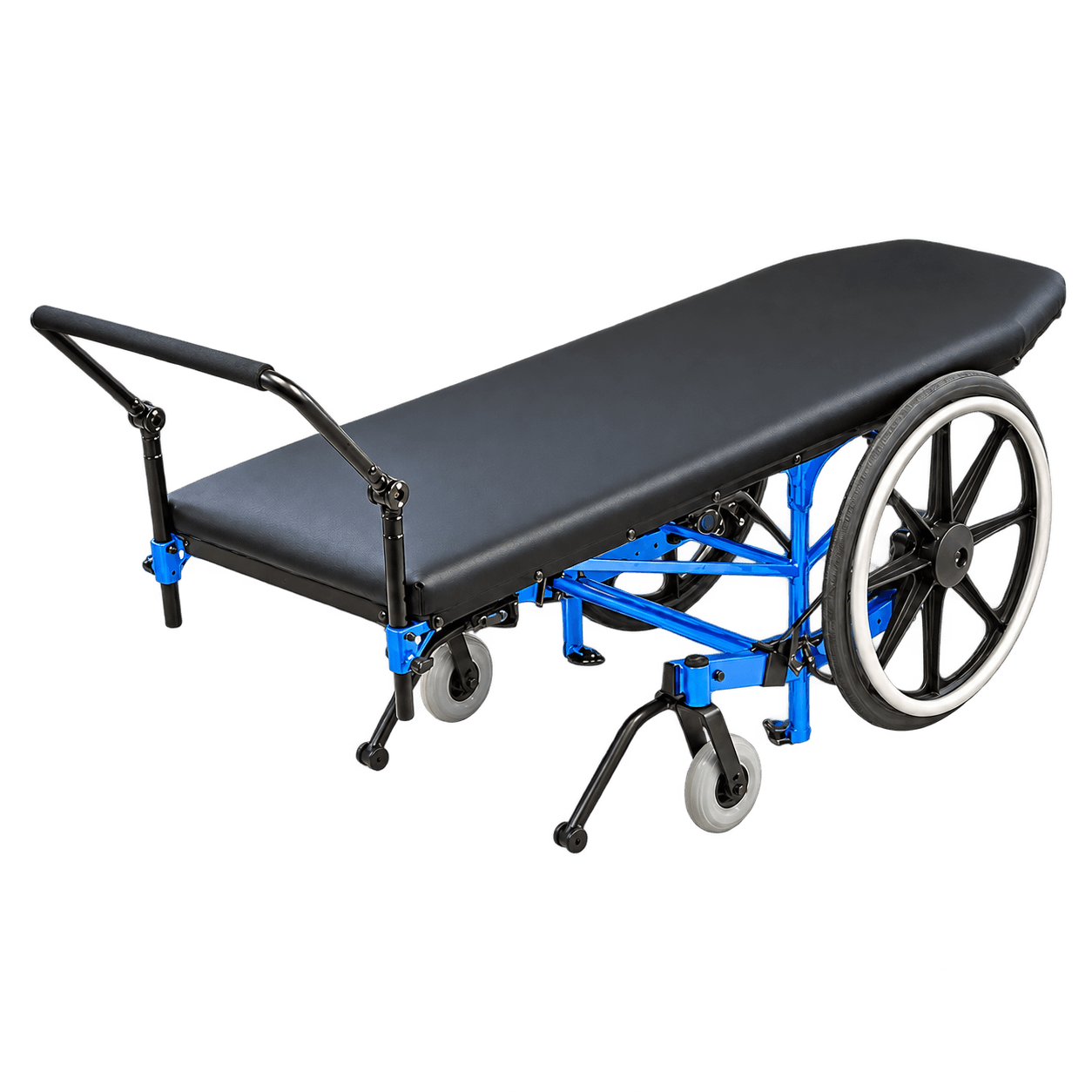
The prone cart: adjustable push rims, user-operated disc brakes, 22” × 70” platform standard or custom.
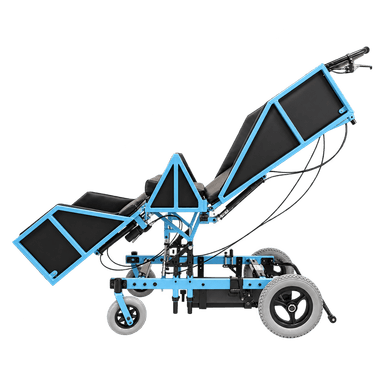
A padded flat platform that tilts in space as one piece, like a bed: the head and legs do not tilt independently.
Flat tilt-in-space platform
Built to order; ask for a quote.
When the patient lies on their back and is moved by staff: a flat platform that tilts in space like a bed, with patented lateral tilt available.
A prone cart is used when sitting is not an option: healing pressure injuries over the sacrum or ischial tuberosities, recovery from flap surgery, spinal fusion, severe hip contractures or conditions where any load on the buttocks is contraindicated. Lying prone takes the pressure off, but a bed takes away independence. A self-propelled prone cart gives it back: the patient moves through the unit, the dining room and the yard on their own.
The Gunnell Self Propelling Gurney (SPG) is built for that. Push rims adjust fore and aft and vertically so the patient can reach them from the platform, independent disc brakes are operated by the user, front and rear anti-tippers stop it going over, and a short wheelbase with tapered front corners gets it through doorways. The platform is 22” × 70” as standard, or custom, with pressure-relief Sunmate foam under a waterproof, washable cover. Tilt-in-space and Gunnell’s patented lateral tilt can be added, manual or power.
Each gurney is built to order in the USA, with the same five-year warranty on Gunnell-designed parts as the rest of the line.
Dimensions and options published by Gunnell. Both are built to specification.
Every Gunnell chair is adjusted to the patient before it ships. These are the decisions the quote needs.
Prone mobility needs head and neck control and enough shoulder range to work the push rims. The rims adjust fore and aft and vertically, so they are set to the patient’s reach, not the other way round.
The standard platform is 22” × 70”; width and length are built to order. Check the length against lifts and corridors, and the platform height (18” with 20” wheels, 22” with 24” wheels) against tables and transfer surfaces.
Sunmate pressure-relief foam at 1” or 2” under a waterproof Dartex cover is the usual choice on wound-care units; vinyl and Rubatex covers and poly foam are available.
Fixed or flip rails at head and foot and padded sides keep the patient on the platform when staff move the gurney over thresholds or into vehicles.
Gunnell gives no base HCPCS code for the Self Propelling Gurney or the Flat Platform Chair: both are quoted as custom items, and the supplier determines the code for each claim.
HCPCS codes provided by Gunnell are for reference only. Providers are responsible for determining the appropriate billing codes. Please contact a Medicare professional for further assistance.
Yes. The push rims adjust fore and aft and vertically for self-propulsion from the prone position, and the disc brakes are independent and user-operated. Front and rear anti-tippers are standard.
22” wide by 70” long as standard. Custom widths and lengths are built to order, and the platform-to-floor height is 18” with 20” wheels, 22” with 24” wheels, or custom.
The gurney is specified with 1” or 2” poly or Sunmate pressure-relief foam and a zippered vinyl, Dartex or Rubatex cover; Dartex is waterproof and washable. Rail pads are optional.
The short wheelbase and tapered front corners are designed for doorways and tight spaces. Confirm the overall width for your doors with the quote: it depends on the platform width and the wheels specified.
Then the Flat Platform Chair may be the better choice: the same kind of padded platform, lying flat, tilting in space like a bed and pushed by a caregiver, with patented lateral tilt available.
Tell us the patient’s height, weight and reach, the wound or condition and where the gurney will be used. Gunnell returns a configured quote with lead time.
Whether you’re seeking a custom mobility solution for yourself, a loved one, or your clients, we’re here to assist you throughout your journey.
Models, number of chairs, care setting and the measurements you have. Gunnell replies with a configured quote and lead time.
Capacity, tilt, recline, widths, depths, heights, wheels, brakes and codes side by side. Printable for tenders.
Questions about a patient, a configuration or a chair you already have go straight to the factory that builds them.